Archive for the ‘ReplyButler’ Category
Thursday, August 20th, 2015
T he new update 5.15 of our Outlook helpdesk software is online. The update fixes problems that could occur in the previous version when displaying the plentyMarkets information.
More information about the program can be found on the Outlook-helpdesk page.
Posted in New Release, Outlook, ReplyButler | Comments Off on ReplyButler: Outlook text modules 5.15
Monday, August 10th, 2015
 The new update 5.14 of our Outlook helpdesk software is online. The update supports hyperlinks in RTF cliptexts, weekdays in answer rules and new plentyMartkets-attributes. Furthermore the support for Windows 10 and Outlook 2016 was improved.
More information about the program can be found on the Outlook-helpdesk page.
Posted in New Release, Outlook, ReplyButler | Comments Off on ReplyButler: Outlook text modules 5.14
Saturday, March 21st, 2015
The new version 5.13 of our Outlook helpdesk software is now available. The update fixes several smaller problems.
More information about the program can be found on the Outlook-helpdesk page.
Posted in New Release, Outlook, ReplyButler | Comments Off on ReplyButler: Outlook text modules 5.13
Monday, December 8th, 2014
 The new version 5.12 of our Outlook helpdesk software is now available. The update has some detail improvements for tracking codes and some smaller bugfixes.
More information about the program can be found on the Outlook-helpdesk page.
Posted in New Release, Outlook, ReplyButler | Comments Off on Outlook helpdesk 5.12
Monday, October 6th, 2014
The new version 5.11 of our Outlook helpdesk software is now available. The update improves the use regarding tracking codes and multiple helpdesks.
More information about the program can be found on the Outlook-helpdesk page.
Posted in New Release, Outlook, ReplyButler | Comments Off on Outlook helpdesk 5.11
Friday, August 22nd, 2014
The new version 5.10 of our Outlook-text-module-software is now available. The update improves the installer and fixes two issues with the addressing.
More information about the program can be found on the Outlook-text-modules page.
Posted in New Release, Outlook, ReplyButler | Comments Off on ReplyButler 5.10: Outlook text modules
Tuesday, July 1st, 2014
The new version 5.09 of our Outlook-text-module-software is now available. The update includes support for the latest plentyMarkets version and fixes some minor issues.
More information about the program can be found on the Outlook-text-modules page.
Posted in New Release, Outlook, ReplyButler | Comments Off on ReplyButler 5.09: Outlook text modules
Monday, May 19th, 2014
The new version 5.08 of our Outlook-text-module-software is now available. The update brings improvements and fixes for formal-recognition and the learning of relevance info.
More information about the program can be found on the Outlook-text-modules page.
Posted in New Release, Outlook, ReplyButler | Comments Off on ReplyButler 5.08: Outlook Textmodules
Monday, March 3rd, 2014
The new version 5.07 of our Outlook-text-module-software is out now. The update brings several improvements and fixes for changing the language, inserting attachment and the position of the greeting phrase.
More information about the program can be found on the Outlook-text-modules page.
Posted in New Release, Outlook, ReplyButler | Comments Off on ReplyButler 5.07: Text modules for Outlook
Monday, November 18th, 2013
The new version 5.06 of our Outlook-text-module-software is out now. The updates contains improvements for Outlook 2013, Outlook 64-Bit, PlentyMarkets 5.00 and Microsoft EMET.
More information about the program can be found on the Outlook text modules page.
Posted in New Release, Outlook, ReplyButler | Comments Off on ReplyButler 5.06: Text modules für Outlook
Friday, June 28th, 2013
The new version 5.05 of our text module software for Outlook is now available. The adapts ReplyButler to the new PlentyMarkets version and allows you to move the e-mail depending on the used cliptexts.
More information about the program can be found on the Outlook text modules page.
Posted in New Release, Outlook, ReplyButler | Comments Off on ReplyButler 5.05: Text modules für Outlook
Tuesday, February 19th, 2013
The new version 5.04 of our text module software for Outlook is now available. The update improves the Outlook 2013 compatibility and include several other smaller improvements.
More information about the program can be found on the Outlook text modules page.
Posted in New Release, Outlook, ReplyButler | Comments Off on ReplyButler 5.04: Text modules für Outlook
Friday, January 11th, 2013
A customer recently had the problem that e-mails were stuck in the outbox whenever he had just looked at the folder. Was this caused by our Outlook tool ReplyButler? Well, that wasn’t the case (of course 😉 ). But nevertheless it’s a good reason to show 2 solutions to this widespread problem here:
1. Workaround
Double-click the e-mail in the outbox, switch to another folder and now submit the e-mail again.
2. Real solution
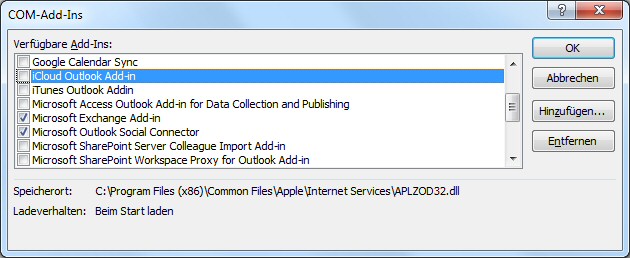
The only solution to this problem is to disable addins systematically, because one of them causes this problem. You can do that at “File > Options > Add-Ins > Go to: Com-Add-Ins”.
In the customer’s case the problem was caused by the iCloud add-in:
Posted in Outlook, ReplyButler, Trick | Comments Off on Tipp: When e-mails are stuck in the outbox
Tuesday, November 20th, 2012
The new version 5.03 of our text module software for Outlook is now available. The update improves lots of details regarding colors, move rules and PlentyMarkets and fixes several small problems.
More information about the program can be found on the Outlook text modules page.
Posted in New Release, Outlook, ReplyButler | Comments Off on ReplyButler 5.03: Text modules für Outlook
Thursday, September 27th, 2012
 The new version 5.02 of our outlook text module software is now available. The update now supports Outlook 2013 and fixes a problem that could happen under Outlook 64 bit.
More information about the program can be found on the Outlook text modules page.
Posted in New Release, Outlook, ReplyButler | Comments Off on ReplyButler 5.02: Text modules für Outlook 2013
